Car keys
Transponder cloning and adding a key: ask which result is being supplied
Cloning and adding a separately enrolled credential are different approaches, and neither is available for every system. The distinction can matter for future owner programming and key management. Ask which method is proposed, what the resulting spare will do and how it will be tested. Do not assume that two physical keys necessarily appear to the vehicle as two independent enrolled identities.
Understand the difference at the customer level
Cloning and enrollment describe different ways a supported credential relationship may be established. A cloning process concerns reproducing supported credential information, while adding a key concerns the vehicle's supported recognition process. The available route depends on the actual system and equipment. Neither label should be used as a blanket promise that any vehicle can receive a spare through that method or that every access-management consequence is identical.
Start from the working-key situation
Explain how many keys currently operate the vehicle and whether they are known to be distinct credentials. Do not assume that two physical objects automatically satisfy a procedure requiring two particular recognized keys. The provider needs the actual vehicle and credential information. If the history of a spare is unknown, say so rather than guessing whether it was cloned or independently enrolled during an earlier appointment.
Ask about later access-management decisions
If your goal includes addressing a missing credential, discuss that separately from making a working spare. The way a replacement is supplied may matter to how individual credentials are managed later. Ask the provider to explain the supported options and limitations for the vehicle without requesting a universal rule. A simple statement that the new key starts the engine does not answer every question about the missing key's remaining access.
Read equipment claims within their scope
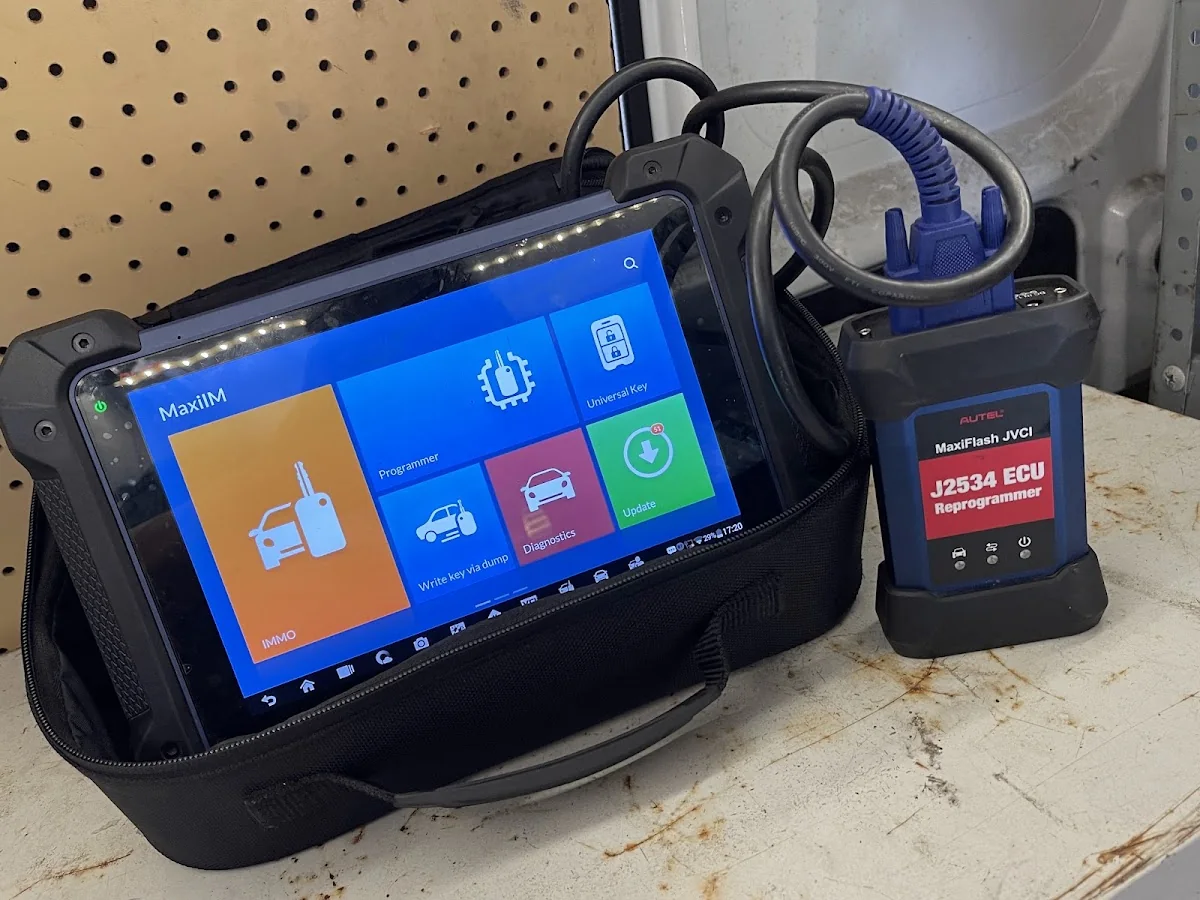
Autel's KM100 materials list cloning-related and immobilizer-learning capabilities separately. This supports distinguishing the concepts, not assuming that either is available for every chip or vehicle. Product coverage and the requested operation need a specific check. If another provider previously used a different method, that history is worth sharing, but it does not prove the same method is appropriate for the current task or component.
Choose an outcome you understand
Before work begins, agree on whether you are obtaining a practical spare, changing recognized access where supported or resolving a failed credential. Have the resulting key demonstrated independently and keep a plain-language description of the supplied service. You do not need confidential programming data to understand the outcome. You do need to know which goal was achieved and which questions about existing or missing keys remain outside the completed work.
Before you call
- Describe known working keys and any uncertain service history.
- Discuss missing-credential access separately from spare production.
- Record the supported method and practical outcome in ordinary language.
Follow-up questions
Do two physical keys always count as two distinct credentials?
Do not assume so. The relevant procedure may require particular recognized keys, and the provider needs to assess the actual system and available credentials.
Should cloning be described as universally better or worse?
No. Suitability depends on the vehicle and the owner's goal. Compare the supported outcome and access-management implications rather than choosing solely from the method's name.
Official reference
Autel: KM100 key generation and IMMO learning ↗
Equipment terminology and listed functions. Coverage must be checked for the exact vehicle and operation; this is not an AID Locksmith equipment or compatibility claim.
Published by AID Locksmith, owned by Allan, serving Greater Sacramento. General service checklists are editorial guidance; product instructions apply to the named model.