Car keys
An OBD socket is not a promise of universal key programming
The presence of a diagnostic connector does not establish the available key procedure. Security access, the vehicle's electronic architecture and supported equipment determine the authorized programming route. Do not select a service based only on the socket shape. Share the exact vehicle and key situation, and let the technician identify the documented approach without promising that every replacement uses the same connection.
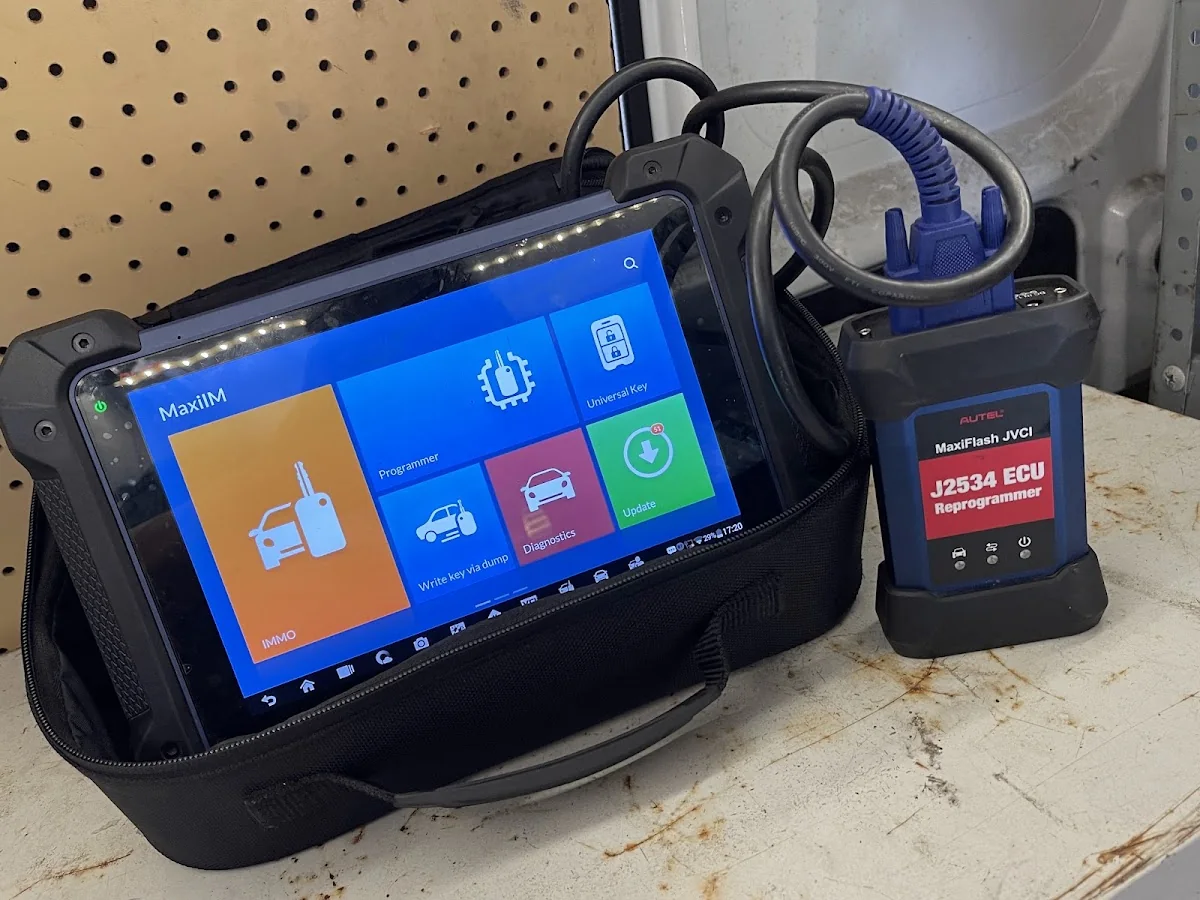
A connector is an access point, not a coverage list
The presence of a diagnostic connector does not establish that every key-related operation can be performed through it. The vehicle's supported systems, the requested operation and the equipment's actual coverage matter. Seeing a familiar socket should not lead an owner to buy a programmer or replacement fob on the assumption that all vehicles using that connector accept the same key procedure.
Identify the job beyond the connection
Explain whether you need an additional credential, replacement after all keys are lost or assessment following a failed attempt. Include relevant vehicle market and component history. These details tell the provider more than a photograph of the socket. The connection method is one part of the workflow; it does not replace compatible parts, authorization requirements or a determination that the intended operation is supported.
Read tool descriptions without extending them
Autel describes immobilizer-learning functions through OBD for its KM100 product within the tool's supported applications. That is a specific capability statement, not a claim about every vehicle with a diagnostic port. Before purchasing equipment for personal use, check the exact application and operation in the manufacturer's current coverage resources. Do not infer support from a cable that physically plugs in.
Keep failed attempts visible in the history
If a tool was connected previously, tell the technician what was attempted and what messages appeared. Do not erase the history by describing the vehicle as untouched. Preserve available records without running additional unrelated functions to see what happens. A provider can assess the present state more effectively when it knows whether the current symptoms existed before or after an attempted key-related operation.
Evaluate the result beyond a successful connection
A tool recognizing a vehicle or displaying a menu is not the same as delivering a working credential. Ask what the appointment will establish and how the new key will be demonstrated. If the supported route differs from what you expected, have the change explained before additional work is authorized. The customer outcome is normal agreed vehicle operation, with limitations recorded, rather than the mere fact that equipment connected to a port.
Before you call
- Define the key operation instead of relying on connector shape.
- Verify application-specific support in current equipment information.
- Preserve messages and history from any earlier tool connection.
Follow-up questions
Does a programmer showing my vehicle name prove the key operation will work?
Not by itself. Identification, menu availability and support for the required operation are different questions. Confirm the exact task and relevant conditions with the equipment provider or technician.
Should I buy a generic diagnostic device solely because it includes a matching cable?
A matching connector does not establish key-programming capability. Review the actual functions and specific coverage before making a purchase for that purpose.
Official reference
Autel: KM100 key generation and IMMO learning ↗
Equipment terminology and listed functions. Coverage must be checked for the exact vehicle and operation; this is not an AID Locksmith equipment or compatibility claim.
Published by AID Locksmith, owned by Allan, serving Greater Sacramento. General service checklists are editorial guidance; product instructions apply to the named model.